

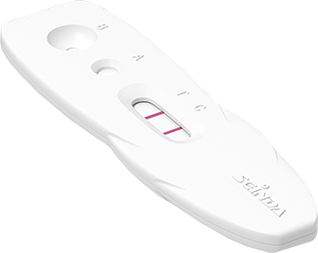
Matrix Metalloproteinase-9 (MMP-9) is an enzyme linked to the breakdown of corneal epithelial barrier function and inflammation in DED. MMP-9 is a critical biomarker associated with ocular surface inflammation in Dry Eye Disease (DED). Elevated levels are associated with more severe disease and poorer ocular surface health.
Used with the i-ImmunDx™ Analyzer, the MMP-9-POC test is a quantitative point-of-care assay designed to detect Matrix Metalloproteinase-9 (MMP-9) in tear fluid. The test provides clinicians with a rapid and objective tool to assess inflammatory status, improving diagnostic precision and treatment guidance.
MMP9-POC Clinical Applications:
- DED Subtyping and Management:
– Discriminate Inflammatory DED vs Non-inflammatory DED;
– Treatment Selection: prescribe anti-inflammatory treatment or not and for how long;
- Monitoring Severity and Efficacy: Severity Assessment; Efficacy Monitoring and Treatment Optimization;
- Preoperative Management: Evaluation of ocular surface inflammation and health before and after Cataract and refractive surgery to reduce post surgical complications.
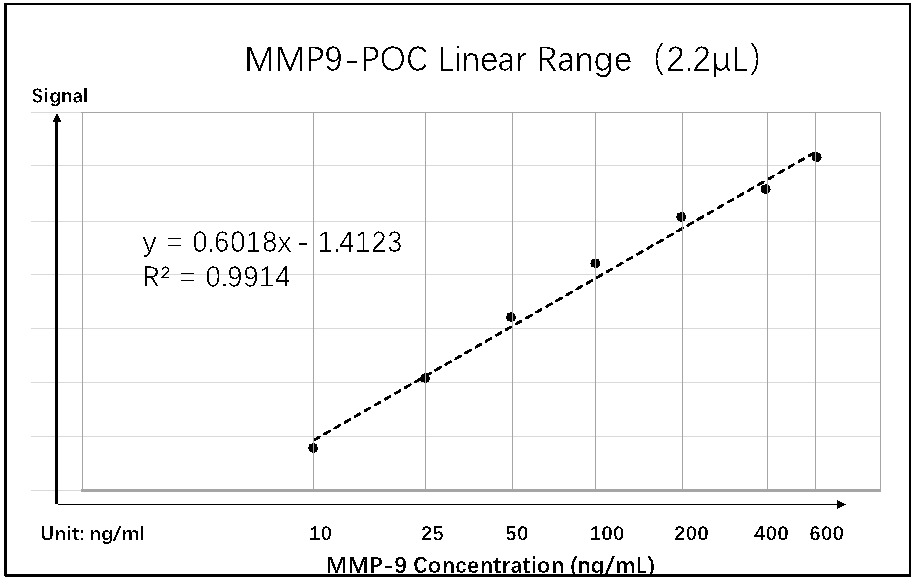
MMP9-POC Analytical Properties:
- Sensitivity: ≤ 5.0 ng/mL
- Precision: CV ≤ 15.0%
- Linear range: 10.0~600 ng/mL
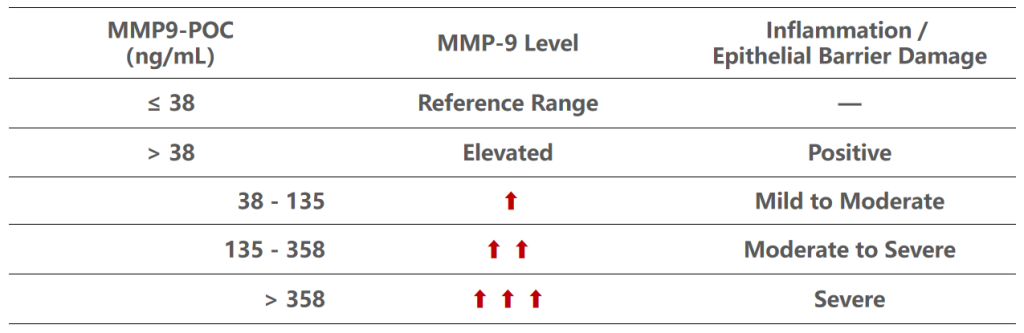
Measurement of Ocular Surface Inflammation/Damage
For more information, please contact us at sales@seindabio.com.
MMP9-POC Brochure
Publications
- Starr, Christopher E et al. “An algorithm for the preoperative diagnosis and treatment of ocular surface disorders.” Journal of cataract and refractive surgery vol. 45,5 (2019): 669-684.
- TFOS DEWSIII 2025
Lymphotoxin-α (LTA) plays a pivotal role in maintaining ocular immune tolerance by activating regulatory T cells (Tregs) through the TNFR2 pathway. Reduced LTA levels in tears have been associated with disrupted immune homeostasis, a key factor in the pathogenesis of DED. By quantifying LTA, the LTA-POC test aids in identifying patients with immune-mediated DED, supporting personalized treatment strategies and monitoring therapeutic efficacy.
Clinical Significance:
LTA-POC: Quantifying Immune Balance in Dry Eye Disease
Used with the i-ImmunDx™ Analyzer, the LTA -POC test is a quantitative point-of-care assay designed to quantify LTA in tear fluid. The test provides clinicians with a rapid and objective tool to assess inflammatory status, improving diagnostic precision and treatment guidance.
- Diagnosis of Dry Eye
- Grading Dry Eye Severity
- Discriminate Goblet Cells / Mucin Deficient Dry Eye versus T cell Activated Dry Eye
- Monitor treatment efficacy
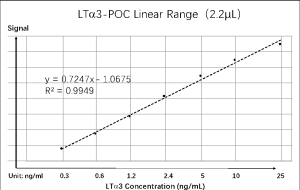
LTA-POC Analytical Properties :
- Volume: 2.2 μL
- Sensitivity: ≤ 0.10 ng/mL
- Precision: CV ≤ 15.0%
- Linear range: 0.25~10 ng/mL (r ≥ 0.99)
- Test time: 15min

Why Choose LTA-POC:
Traditional diagnostic methods for DED often lack specificity and fail to correlate with disease severity. The LTA-POC test addresses this gap by providing objective, molecular-level data on immune status, enabling clinicians to differentiate between DED subtypes and tailor interventions accordingly.
For more information, please contact us at sales@seindabio.com.
LTA-POC Brochure
Publications
- A. Kruglov et al. Nonredundant Function of Soluble LTa3 Produced by Innate Lymphoid Cells in Intestinal Homeostasis. Science 2013
- Dostert C , Grusdat M , Letellier E , et al. The TNF Family of Ligands and Receptors: Communication Modules in the Immune System and Beyond[J]. Physiological Reviews, 2019
- J-F Huang et al Altered Lymphotoxin alpha (LTA) level in tear fluid, measured with a POCT test, in dry eye patients. IOVS July 2018
- X. Lin J-F Huang & Z. Liu. Large Scale, Prospective, Multicenter, Clinical Evaluation of Point-of-Care Lymphotoxin alpha (LTA) Test in Dry Eye Disease. IOVS June 2020
- Y Yang, T Lin, L Gong, Tear lymphotoxin-alpha deficiency is associated with conjunctival epitheliopathy in patients with dry eye disease. The Ocular Surface 2025 (38)
Immunoglobulin E (IgE) is a specific mediator of type I hypersensitivity reaction and plays a key role in the pathogenesis of allergic conjunctivitis. It has important guiding significance for clinical diagnosis and treatment. An increase in Tear IgE is helpful for the diagnosis of allergic conjunctivitis.
The IgE-POC is a point-of-care diagnostic test developed to measure total Immunoglobulin E (IgE) levels in tear fluid—offering a rapid, objective solution for the detection and assessment of allergic conjunctivitis.Designed for use with the i-ImmunDx™ Analyzer, this test enables clinicians to confirm allergy-related inflammation in minutes, improving diagnostic accuracy and supporting more targeted treatment decisions.
Clinical Significance:
Allergic conjunctivitis can be difficult to distinguish from other forms of ocular surface inflammation based on symptoms alone. Used with the i-ImmunDx™ Analyzer, the IgE-POC test is a quantitative point-of-care assay designed to quantify IgE in tear fluid. The test provides molecular-level confirmation, helping clinicians differentiate allergic from non-allergic causes of eye irritation and enabling more precise treatment planning—including appropriate use of antihistamines or anti-inflammatory therapies.
Diagnosis of AC, discriminate from infection or Dry Eye
- Subtyping: Type I (IgE mediated) vs Type IV (T cell mediated) Allergic Reaction
- Guide treatment:Dual-action Drugs/Antihistamine/Mast Cell Stabilizer/Glucocorticoid vs Immunosuppressants/Glucocorticoid
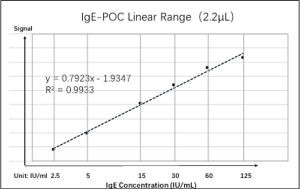
IgE-POC Analytical Properties:
- Volume: 2.2 μL
- Sensitivity: 1.0 IU/mL
- Precision: CV ≤ 15.0%
- Linear range: 1.5-100 IU/mL
- Test time: 10min
Why Choose IgE-POC:
- Objective confirmation of allergy-related eye disease
- Supports differential diagnosis in multifactorial dry eye or ocular discomfort
- Simple, quick, and deployable in routine clinical practice
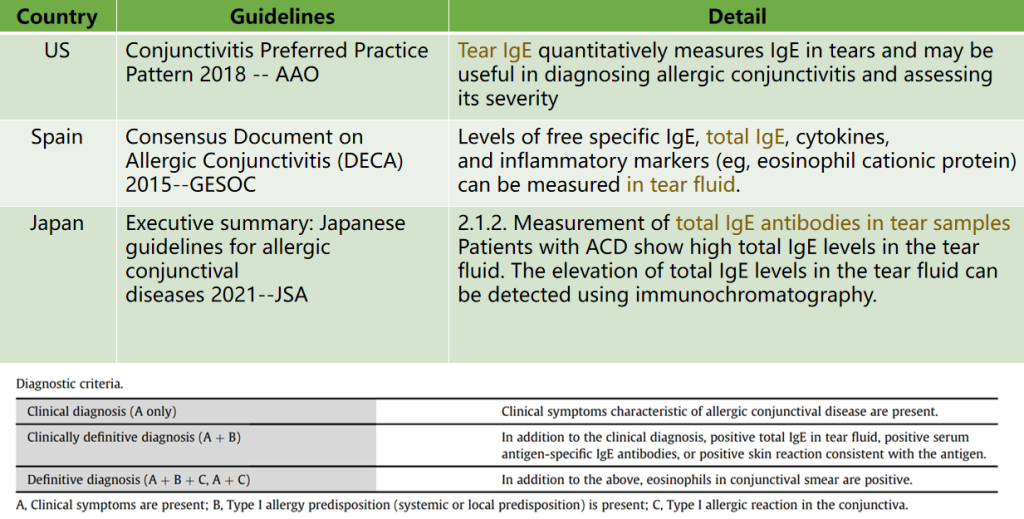
Guidelines: Tear IgE measurement for the diagnosis of allergic conjunctivitis
For more information, please contact us at sales@seindabio.com
IgE-POC Brochure
Launching in 2026
Launching in 2026