Driving Innovation in Ocular Disease Research and Clinical Trials
Expert Team Advancing Translational Ocular Research Through Multi-Omics, Clinical Trials, and Cutting-Edge Bioinformatics
The Seinda Laboratory
Advancing eye health through cutting-edge multi-omics research and decades of expertise in immunology and ophthalmology.
Our team specializes in immunology, systems biology, and bioinformatics, with a strong focus on disease mechanisms and multi-omics analysis. We have extensive experience in ophthalmology research, biomarker discovery, and ocular drug trials. Founder and CEO Dr. Jing-feng Huang, a Ph.D. graduate from the Scripps Research Institute, is a leading expert in dry eye research with over 20 years of experience and more than 30 publications in top journals. She also served on the advisory board for the NEI-funded DREAM clinical trial.
Biomarkers
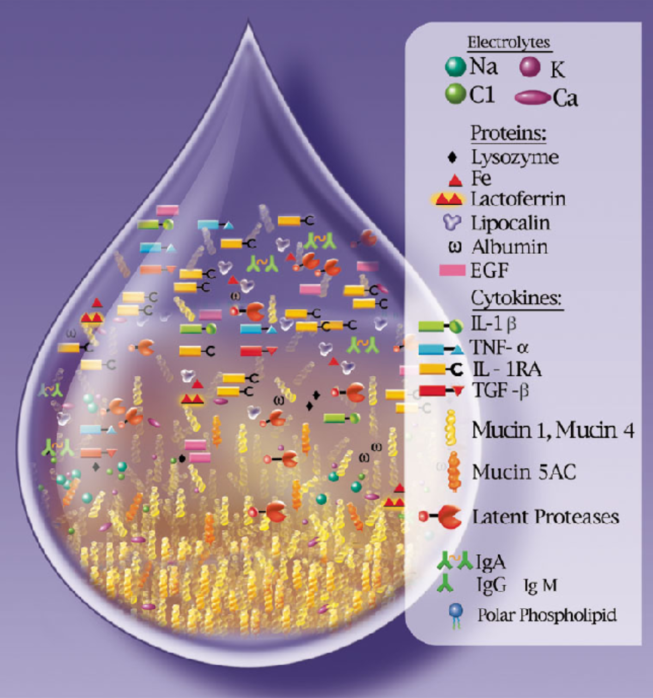
Biomarkers refer to biochemical indicators that can mark changes or potential changes in the system, organs, tissues, cells, and subcellular structures or functions. They often originate from human tissues or body fluids and have a wide range of applications. Tears and conjunctival impression cytology are easily accessible clinical samples in ophthalmology and can be used for biomarker research.
Tears are rich in proteins and metabolites, and changes in their composition are typically closely associated with the physiological or pathological status of the eyes. Therefore, the analysis and detection of tear components and changes in the levels of biomarkers can be used to explore the molecular mechanisms of diseases, providing scientific basis for clinical diagnosis and drug evaluation.
Conjunctival impression cytology samples contain conjunctival epithelial cells, goblet cells, and immune cells, and they can be used to detect the expression levels of specific genes such as mucins and inflammatory factors. This assessment helps evaluate the physiological or pathological status of the ocular surface.
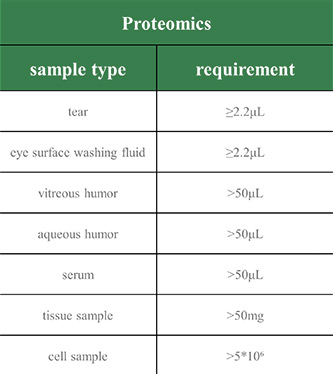
Our assay can rapidly detect nearly a thousand protein markers in micro clinical samples, with detection limits as low as fg/mL. We offer a variety of pre-combined research panels, including those for dry eye, inflammation factors, immunology, cytokines, and metalloproteinases. We also offer exploration series, for example 384 inflammation factors and 1536/3072 extensive protein exploration etc.
Features of our assay include: ultra-small sample volume requirements of 1~6μL; ultra-high throughput, allowing rapid detection of nearly a thousand protein markers in batch samples; high sensitivity, with detection limits reaching fg/mL; and a wide detection range spanning 10 orders of magnitude, covering proteins of high, medium, and low abundance.
Multi-Genomics Platforms
Serving for the screening for biomarkers and targets related to precise disease subtyping, diagnosis, and treatment, providing significant technical support for breakthroughs in basic ophthalmology research, medical diagnostics, and personalized medicine. Our sequencing service includes transcriptome sequencing, metagenome sequencing, and epigenetic sequencing, all tailored with personalized designs to flexibly meet a variety of requirements.
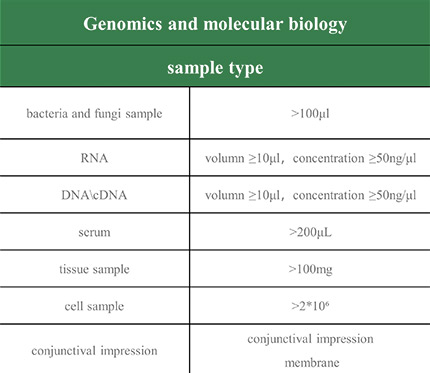
Molecular Biology Technology Platform
Detection of expression levels for DNA, mRNA, and small RNA, including absolute/relative quantification, qualitative analysis, gene typing, etc. Diverse sample types include tissues, cells, conjunctival impression cytology, and more.